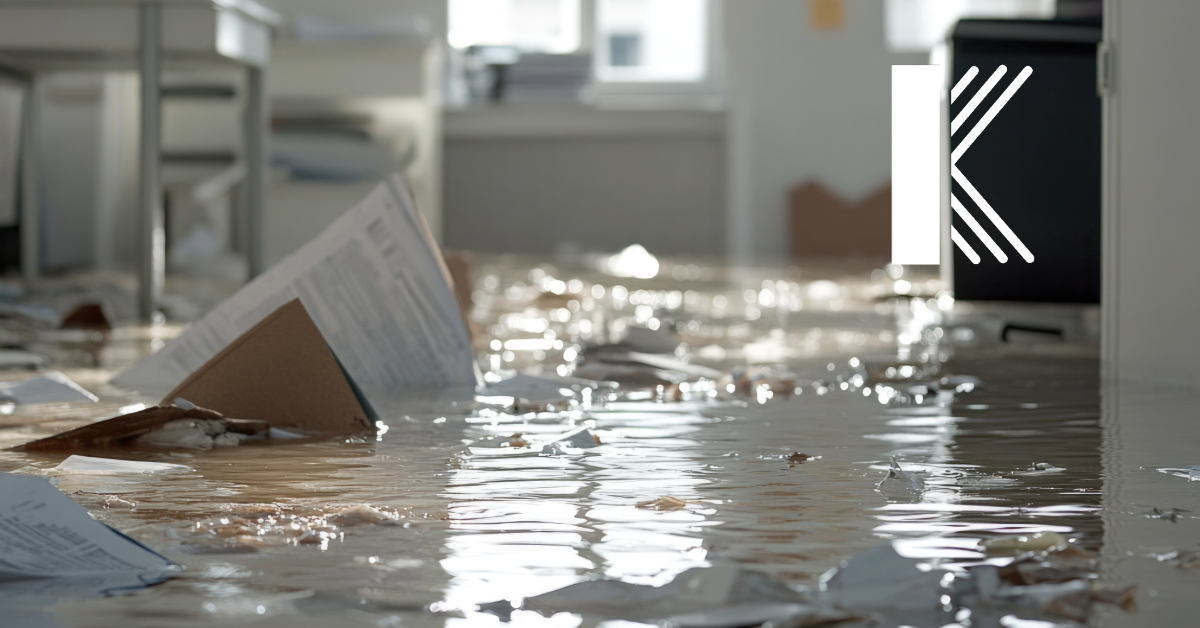
Bertha wasn't a monster. It weakened fast; it didn't bring the kind of damage we braced for with Ida or Francine, and by Thursday it was already sliding west toward Texas. But here's the part worth sitting with: Bertha was Louisiana's first direct hit of the 2026 season, and the first named storm to make landfall here since Francine in September 2024. That's the marker. That's the "season is here" flag going up over south Louisiana.
We've lived through enough Augusts and Septembers down here to know how this goes. The storm that gets your attention is rarely the one that hurts you. It's the one three or four weeks later, after everyone's relaxed, that catches people with lapsed flood policies, under-insured roofs, and businesses that never got around to figuring out what their commercial policy actually covers. So consider this your window. Not a warning to panic . . . a nudge to get your paperwork in order while the Gulf is quiet and you still have time to do it right.
Here's what that actually looks like, whether you're insuring a house in Metairie, a shotgun double in Mid-City, or a small business off Veterans or in the CBD.
For Homeowners and Renters
Whether you're in an old Uptown double or a newer build-out in Kenner, the same few gaps show up again and again when a storm rolls through.
NFIP Flood insurance has a 30-day waiting period; private flood policies usually have a 7 Day Waiting Period. Don't wait.
This is the single most important thing in this entire post. A standard homeowners or renters policy does not cover flood damage. Rising water from storm surge, heavy rain, or a swollen bayou is a separate policy entirely, almost always written through the National Flood Insurance Program or a private flood carrier. And that policy doesn't kick in the day you buy it. There's a mandatory 30-day waiting period before coverage takes effect in most cases.
That means if a storm is already spinning in the Gulf with your name on it, it is too late to buy flood coverage for that storm. The only way this works is buying it now, in the calm, so it's already active when the next system organizes in August or September.
Know which "type" of policy you actually have.
Louisiana homeowners may see several different policy forms, including an HO-3 or HO-5 homeowners policy or a DP-1, DP-2, or DP-3 dwelling policy. Dwelling policies are more commonly used for rental properties, older homes, vacant properties, and certain coastal risks, but the policy form alone does not tell the entire story.
The differences can be substantial. Some policies cover only specifically named perils, while others provide broader “open-peril” protection. Some settle losses at actual cash value, which accounts for depreciation, while others provide replacement-cost coverage. Roof-payment schedules, cosmetic-damage exclusions, water-damage limitations, and separate hurricane or named-storm deductibles can create additional gaps.
If no one has explained which form you have, how a loss would be valued, and what the policy excludes, it is worth having that five-minute conversation before a storm—not after one.
We have an old saying at Kastner Insurance Group: Premium sells the policy, but coverage pays the claim. Saving a few hundred dollars annually may sound attractive, but stripped-down coverage could be the difference between paying only your deductible and facing tens of thousands of dollars in uncovered damage.
Check your wind/hail deductible separately.
Most Louisiana homeowners policies carry a separate, higher deductible for named storms or hurricane-force wind, often a percentage of your home's value rather than a flat dollar amount. A lot of people don't find this out until they're filing a claim. Ask now what your actual out-of-pocket number would be.
For Business Owners
If you run a business anywhere from Chalmette to Lafayette, Bertha is a good reminder that "we'll deal with it if it happens" isn't a plan . . . it's a gap.
Commercial property coverage. This is your building, your equipment, your inventory, your signage. Confirm it includes wind and, separately, that you've addressed flood. Commercial flood insurance is also written separately from your property policy, and it also carries that same 30-day waiting period.
Business interruption coverage. This is the one owners forget until they need it most. If a storm shuts you down for two weeks, whether from no power, flooding, wind damage, or even a mandatory evacuation order that closes the parish, business interruption coverage can help replace the income you lose and cover ongoing expenses like payroll and rent while you're closed. Property damage gets the headlines, but lost revenue is what actually puts small businesses under.
Equipment breakdown coverage. Power surges, flickering grids, and generators running equipment they were never meant to run for days at a time all take a toll. Storm season is hard on HVAC systems, refrigeration, medical and dental equipment, computers, and machinery. Equipment breakdown coverage is often a low-cost add-on that fills a gap your standard property policy doesn't touch.
The Real Point of This Post
None of this is meant to scare you into anything. Bertha came and went without leveling neighborhoods, and with any luck the rest of this season is quiet too. But quiet is exactly when the smart move gets made: reviewing what you have, closing the gaps you didn't know were there, and getting flood coverage in place before the next system has a name.
Not sure if your policy actually covers storm or flood damage? Send us a message. We'll sit down, in person or on the phone, whichever is easiest, and walk through exactly what you have, what you don't, and what makes sense to fix before peak season really gets going.
About Kastner Insurance Group





 Levi Kastner : Sep 11, 2025, 5:25:14 PM